Avoid These Common Outdoor Lighting Placement Mistakes
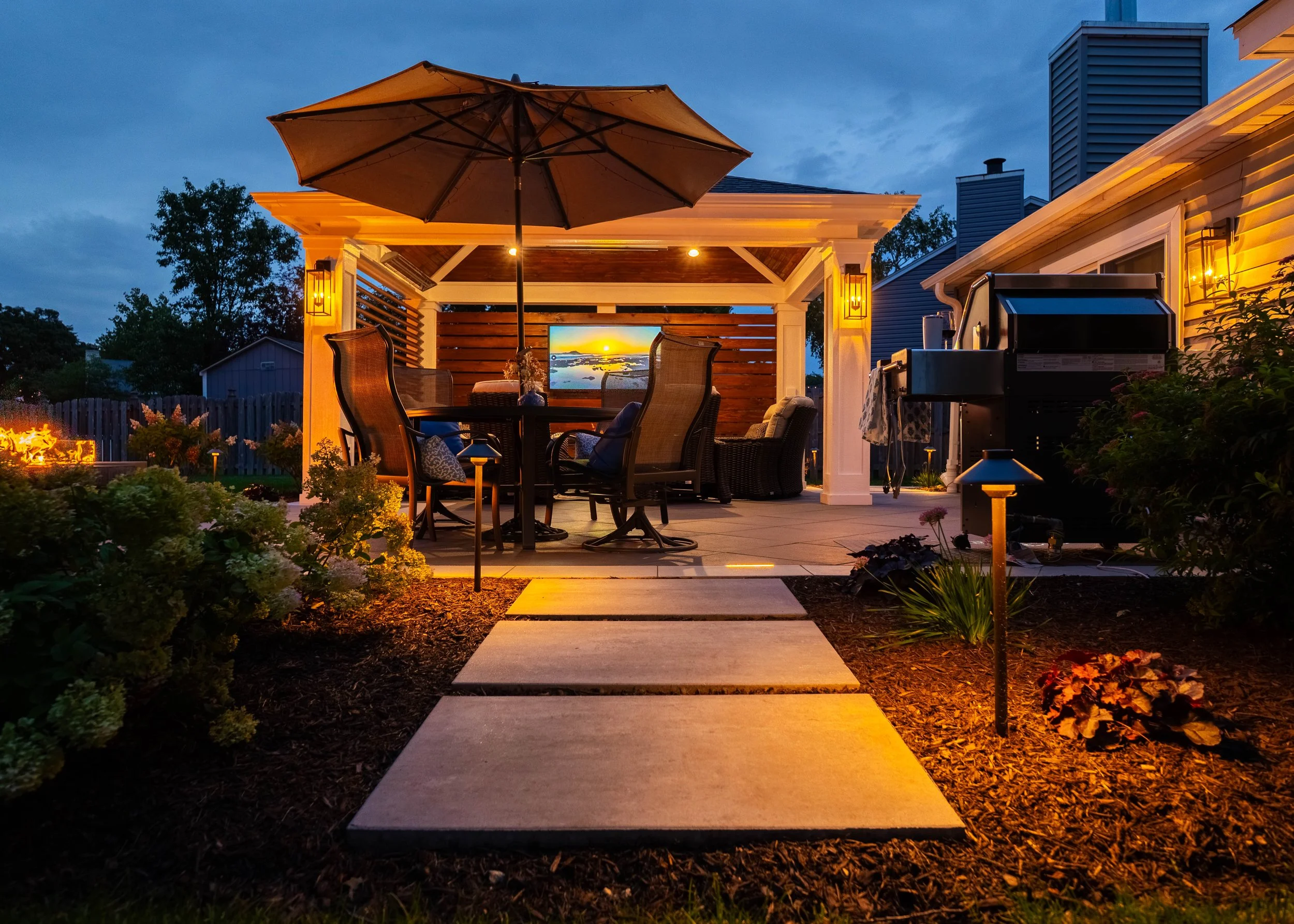
In Wheaton, IL, outdoor lighting plays a critical role in how homeowners experience their backyard after sunset. Thoughtful outdoor lighting highlights structural elements, defines walkways and gathering areas, and complements plantings without overwhelming the landscape. As landscape designers, we often see projects where outdoor lighting was installed without a cohesive plan, resulting in glare, dark pockets, or visual clutter. Avoiding common placement mistakes ensures outdoor lighting enhances both form and function.
Related: What’s Missing From Your Property? Landscape Design and Backyard Design in Elmhurst, IL
Overlighting Key Features With Outdoor Lighting
One of the most common mistakes in outdoor lighting design involves placing too many fixtures around a single feature. When outdoor lighting floods a patio, pergola, or front entry with excessive brightness, it flattens texture and eliminates depth. Natural stone surfaces, for example, lose their dimension under harsh illumination.
We approach outdoor lighting with restraint. Instead of saturating a seating wall or fire feature with multiple fixtures, we strategically place lighting to graze surfaces and reveal texture. Subtle uplighting on natural stone columns or selective downlighting from a pergola creates contrast and visual interest. Balanced outdoor lighting allows structural elements to stand out without dominating the entire backyard.
Ignoring Scale And Proportion In Outdoor Lighting
Outdoor lighting fixtures should relate to the size of the home, planting beds and structural elements. When fixtures appear too small, they fail to provide adequate coverage. When they appear too large, they distract from the landscape.
In our outdoor lighting designs, we evaluate ceiling heights for covered patios, the width of walkways and the scale of surrounding plantings before specifying fixture types. A narrow walkway requires evenly spaced, low-profile lighting to guide movement without creating a runway effect. A large backyard with expansive lawn areas and mature trees may require layered outdoor lighting, including uplights and downlights, to create visual balance. Proportion drives placement decisions from the start.
Placing Outdoor Lighting Without Layering
Outdoor lighting should never function as a single-source solution. Relying solely on path lights or a few wall-mounted fixtures creates uneven illumination and leaves key areas disconnected. Effective outdoor lighting relies on layers.
We design outdoor lighting using three primary layers: ambient, task, and accent. Ambient lighting provides overall illumination across patios and seating areas. Task lighting focuses on outdoor kitchen counters, steps, and dining spaces. Accent lighting highlights specimen trees, architectural details, and focal plantings. When we integrate these layers intentionally, outdoor lighting feels cohesive and purposeful rather than scattered.
Failing to layer outdoor lighting often results in overly bright walkways and completely dark planting beds. A balanced approach ensures walkways remain visible while surrounding plantings and structural elements contribute to the nighttime experience.
Related: 8 Ways Patio Design & Backyard Design in Plainfield, IL Enhance Your Outdoor Living
Poor Placement Around Walkways And Steps
Improper spacing along walkways ranks among the most noticeable outdoor lighting mistakes. Fixtures placed too far apart create inconsistent visibility. Fixtures placed directly across from each other can produce glare and harsh shadows.
In our outdoor lighting installations, we stagger fixtures along walkways to create a gentle rhythm of light. This method softens transitions and reduces harsh contrast. We also consider beam spread and fixture height to avoid shining light directly into sightlines. Around steps and elevation changes, we incorporate subtle integrated lighting within structural elements or adjacent planting beds to define edges clearly without overwhelming the space.
Outdoor lighting should guide movement naturally. When fixtures compete for attention or shine into gathering areas, they interrupt the overall flow of the backyard.
Overlooking Plantings In Outdoor Lighting Plans
Outdoor lighting that ignores plantings often feels incomplete. Mature trees, ornamental trees, and layered shrubs provide opportunities for depth and dimension at night. Without intentional placement, these features fade into darkness.
We evaluate canopy size, branching structure, and bloom color before selecting uplighting angles. In our area, where we design for hardiness Zone 5b conditions, we often install plantings that offer seasonal interest. Outdoor lighting can emphasize spring blooms, summer foliage texture, and winter bark patterns when positioned correctly.
Rather than placing fixtures randomly at the base of every tree, we identify focal plantings and create selective highlights. This approach prevents clutter while preserving visual hierarchy. Outdoor lighting should enhance plantings without overpowering them.
Related: Your Guide to Landscape Design in Elmhurst, IL & Naperville, IL