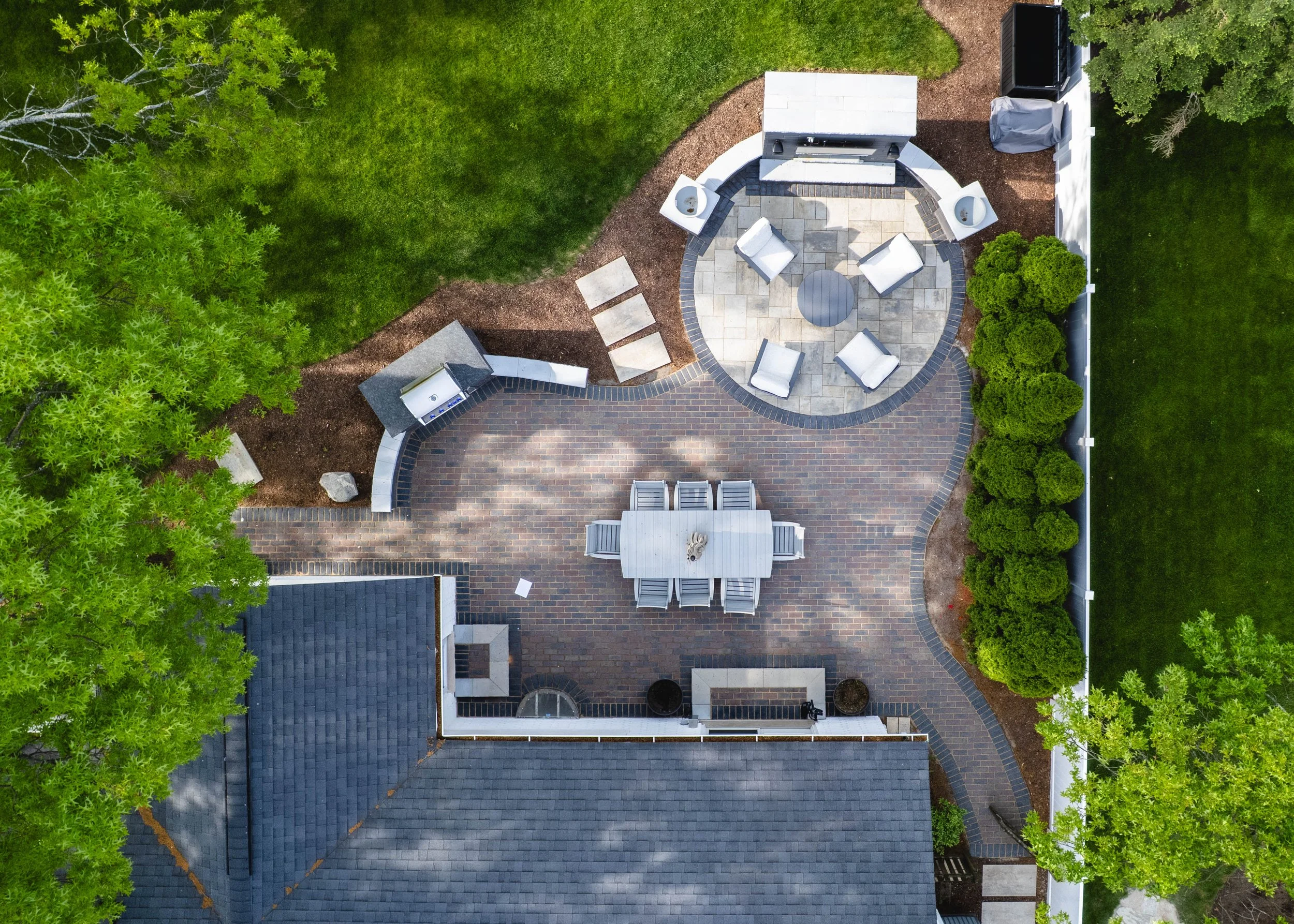
Every backyard remodel in Wheaton, IL starts as a list. A patio that is too small, a slope nobody uses, a grill sitting on the grass, and a vague sense that the whole space could work better. Turning that list into a build means deciding what the yard has to do, in what order the pieces go in, and which decisions close off options later.
Apple Landscape Design is a Wheaton-based landscape design and hardscape company serving homeowners across DuPage, Will and Cook counties. We are also a Unilock Authorized Contractor, trained and certified to install Unilock paver and wall products to manufacturer standards for base preparation, drainage integration and product installation.
The same team that draws the plan puts it in the ground. Here is how the scope of a whole-yard project gets set.
Related: How a Backyard Renovation Transforms the Space the Family Has Been Tolerating for Years
What Should Be Decided Before Any Feature Is Chosen?
How the yard will be used, and by how many people. A space built for six people eating dinner is a different footprint from one built for twenty at a graduation party.
Circulation, seating zones, sun and shade at the hours the family is actually outside, and sightlines from the kitchen window all come before the choice of paver or fire feature. Features chosen first tend to end up in the wrong place.
In What Order Does the Work Actually Happen?
Grading and drainage, then structure, then surfaces, then finishes. Water gets handled first because everything else sits on top of it. Retaining walls and any change in level come next, because they set the elevations.
Paving follows, then built features such as a kitchen counter or fire element, then lighting, then planting. A project that runs out of order pays to redo something.
Which Decisions Cannot Be Changed Later?
Anything under the paving. Conduit for lighting, a gas line, irrigation sleeving crossing the patio, and the drainage layout all have to go in while the ground is open.
Elevations are the other one. Once the base is compacted and the first course is set, moving a patio up or down means taking it apart. These are the items worth over-planning.
Related: Outdoor Living Is Not a Feature You Add. It Is the Reason the Backyard Exists in Wheaton, IL
How Does a DuPage County Property Shape the Plan?
Local soil holds water, and Illinois winters cycle hard, so base depth, drainage integration and material selection carry more weight here than in milder regions.
Lot lines on established Wheaton streets are often tight, which affects both access for equipment and where a structure can sit.
Mature trees are an asset and a constraint, since root zones limit where excavation can go.
Can a Whole-Yard Project Be Phased?
Phasing works well when the full plan is drawn first. The pattern that succeeds is to build the drainage, the grade changes, the primary patio and all the underground services in phase one, then add the fire feature, the kitchen or the shade structure in a later season.
What fails is phasing without a master plan, because phase two then requires opening phase one. Our landscape design and build work starts with the whole yard on paper for that reason.
Start Your Wheaton Backyard With a Drawn Plan
If the backyard has been on the list for a few seasons, the productive first step is a plan for the whole space rather than a price for one feature. That plan starts with how you use the yard and ends with a dimensioned drawing you can build in one stage or three.
Contact Apple Landscape Design to begin your backyard remodel in Wheaton, IL.
In Summary
How long does a full backyard project take once construction starts?
It depends on how much grading and structure the plan includes rather than on the square footage of paving. A drainage correction and a retaining wall add far more time than an extra hundred feet of patio, which is why the schedule is set at the design stage.
Is a permit required for a backyard project in Wheaton?
Some elements require one and some do not, depending on structures, grade changes and impervious coverage. Confirming that during design rather than during construction keeps the schedule intact.
Can an existing patio be kept and built around?
Sometimes, and the answer comes from what is underneath it. If the base and the elevation are sound and the material can be matched or deliberately contrasted, keeping it is reasonable. Apple Landscape Design checks the base before recommending that, because building on a failed base is spending money twice.
Related: Blending Indoor-Outdoor Flow with Backyard & Patio Design in Burr Ridge, IL