How Paver Patio Installation Creates a Surface That Outlasts the Winters in Wheaton, IL
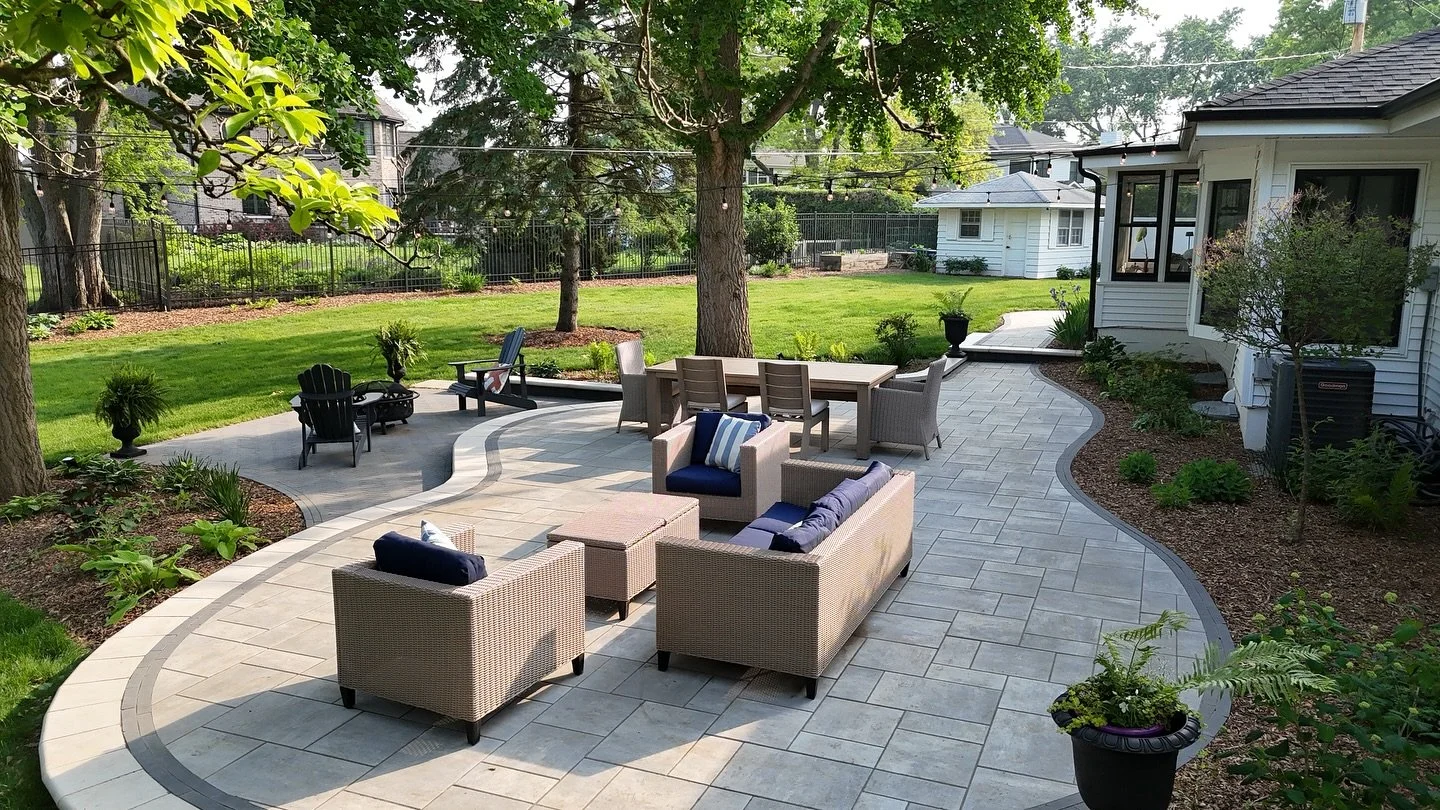
The patio is the floor of the outdoor living space. The outdoor kitchen sits on it. The fire pit anchors one end. The furniture defines the zones. And every gathering from Memorial Day through Thanksgiving happens on its surface. If the paver patio installation was done right, the homeowner never thinks about the base beneath it. If it was done wrong, the base is all they think about by the second winter.
In the Western Chicago suburbs, where the clay soils swell and shrink with every moisture cycle and the frost line extends to 42 inches, paver patio installation is an engineering project that happens to produce a beautiful surface. The beauty comes last. The performance comes from everything beneath it.
Related: Transform Your Outdoor Space With Paver Patio Installation in Downers Grove & Burr Ridge, IL
What the Base Has to Handle
The clay soils across DuPage County, Kane County, and the surrounding communities hold water, expand when saturated, and contract when dry. That dimensional movement transfers directly into any surface that sits on top of the clay without a properly engineered buffer.
A paver patio installation built for this climate requires:
A minimum of 6 to 8 inches of compacted crushed stone aggregate, installed in lifts and compacted at each lift to achieve maximum density
Geotextile fabric between the subgrade and the aggregate base to prevent clay migration that would compromise the drainage and reintroduce instability
A one inch bedding layer of concrete sand screeded to a uniform depth for final leveling
Polymeric sand in the joints to lock the pavers together, resist weed growth, and prevent insect infiltration
Edge restraint along the full perimeter, spiked into the aggregate, to prevent lateral migration of the outermost pavers under foot traffic and freeze thaw movement
These specifications are the baseline, not the upgrade. A paver patio installation that reduces the base depth, skips the geotextile, or uses standard sand in the joints will show the shortcuts within the first or second winter.
How the Patio Connects to the Outdoor Living Space
The patio does not exist in isolation. It connects to the house through a step down or a threshold. It transitions to the lawn through an edge detail. It integrates with the fire feature, the outdoor kitchen, the seating walls, and the walkways that give the outdoor space its structure.
A paver patio installation that is designed as part of the overall landscape plan produces a backyard where every element supports every other element. The transitions feel natural. The proportions are right. The materials coordinate. And the space flows from the back door to the property line without any element feeling like it was added as an afterthought.
The patio that is designed in isolation, without regard for the surrounding features, ends at its edges and feels disconnected from the rest of the yard.
The Surface That Still Looks Right in Year Five
The real test of a paver patio installation is not how it looks on the day the last paver is set. It is how it looks after five winters have tested every layer beneath it. The patios that are still level, still draining, and still solid underfoot are the ones where someone built the base for the clay, not for the budget. If you are planning a paver patio for your property in Wheaton, Naperville, Hinsdale, Glen Ellyn, or the surrounding communities, start with the base conversation. The pavers are the finish. The base is the investment.
Related: Why Brick Paver Installation is a Smart Choice in Lombard & Downers Grove, IL